Verified May 2026
Crypto Card

Ether.fi Referral Code

Use code save15 to unlock up to 15% cashback on groceries and dining plus 3% on everything else with the non-custodial crypto Visa credit card from ether.fi

Up to 15% cashback on groceries and dining, 3% on everything else
save15

ReferralCoder may earn a commission when you sign up with this code, at no extra cost to you. Every code is tested personally to make sure you receive the maximum bonus available.

About the ether.fi referral code save15

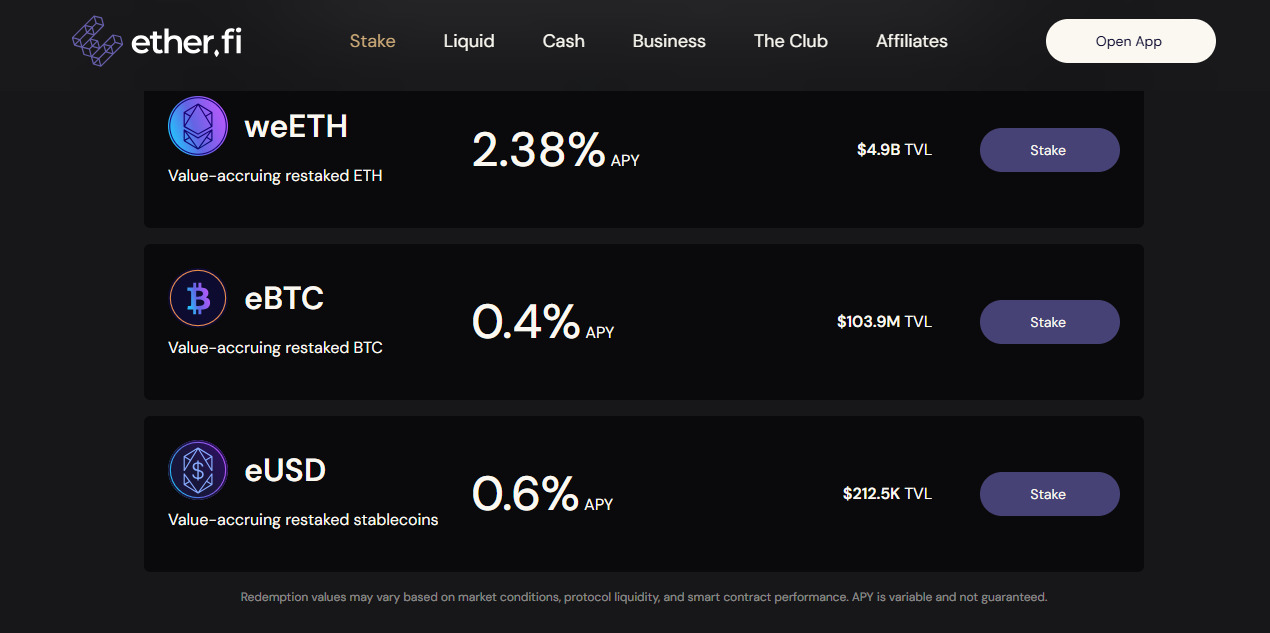
ether.fi is a DeFi-native staking protocol founded in 2023, one of the largest non-custodial liquid ETH staking platforms by total value locked. In 2025 ether.fi expanded beyond pure staking with the launch of ether.fi Cash, a non-custodial Visa credit card that lets users spend directly from their crypto balance at over 100 million Visa merchants worldwide. Unlike traditional crypto cards that require funds to sit on a centralized custodian, ether.fi Cash funds remain in a Gnosis Safe smart contract wallet that the user controls at all times.

The referral code save15 is the verified active code for May 2026. It unlocks the headline cashback rate for new users: up to 15% cashback on groceries and dining at approved merchant categories during active promotional windows, plus 3% on everything else. Cashback is paid in wETH (wrapped ETH) directly to your Gnosis Safe wallet, where it continues accruing staking yield rather than sitting idle as a credit balance.

ether.fi Cash sits in a different category from most crypto cards. Direct Pay mode lets you spend USDC directly with 0% transaction fee on USD purchases. Borrow Mode lets you borrow against your ETH collateral via AAVE, keeping your ETH price exposure while accessing dollar liquidity. The non-custodial architecture, tax-efficient Borrow Mode, and wETH cashback paid into a yield-bearing wallet are a strong package for crypto-native spenders who already hold ETH and stablecoins.
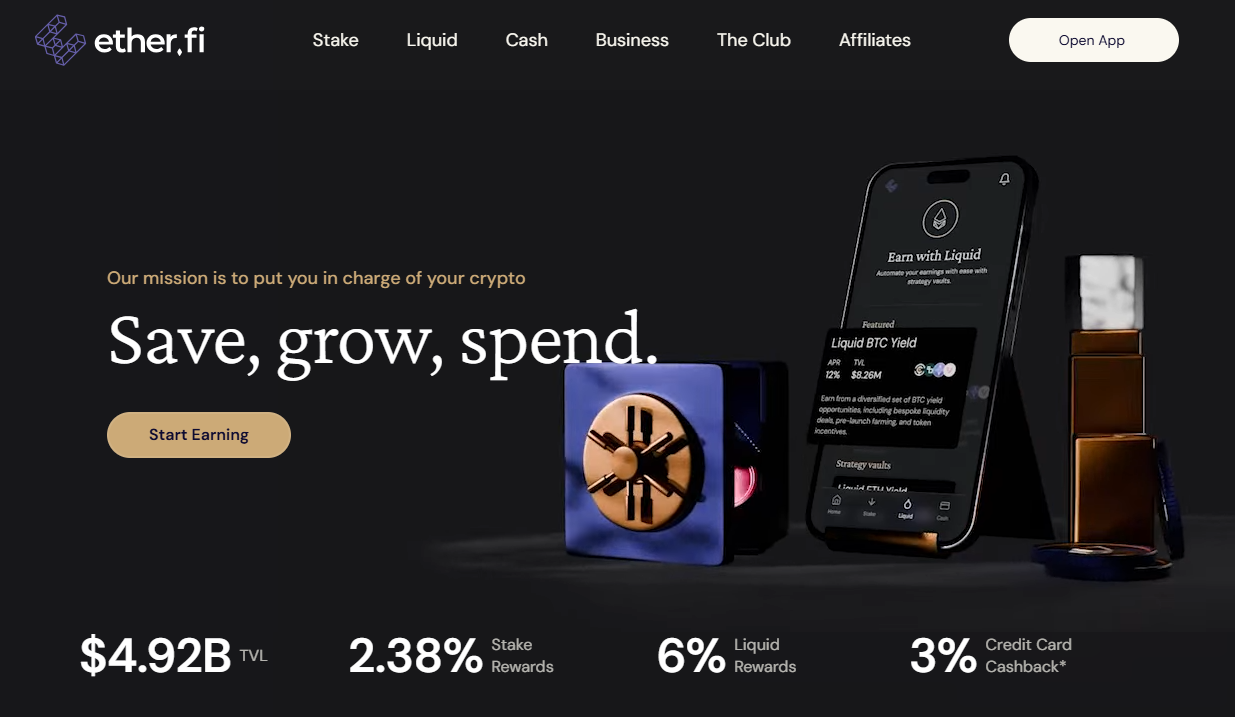
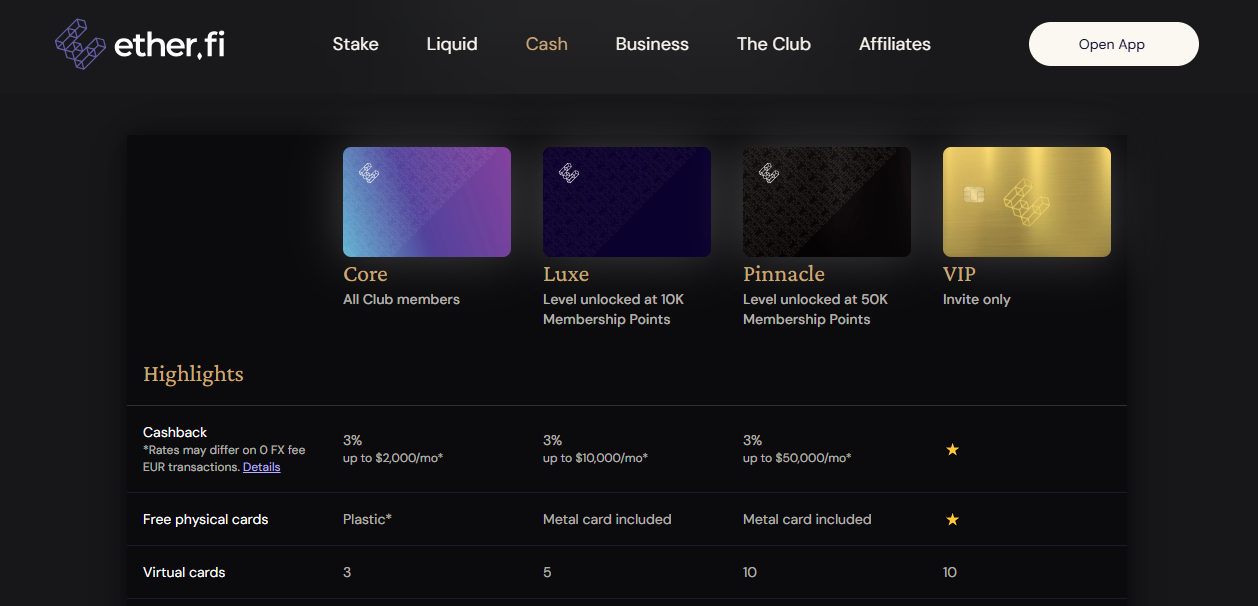
ether.fi Cash Visa credit card showing the non-custodial design with mobile app integration and tier badges

ether.fi Cash referral offer at a glance

Referral codesave15
Promotional cashbackUp to 15% on groceries and dining (active campaigns, approved merchant categories)
Base cashback3% on everything else, paid in wETH
Card typeNon-custodial Visa credit card
Annual fee$0
USD transaction fee0%
EUR transaction fee0%
Non-USD/EUR FX fee1% (lower than most crypto cards)
Physical card fee$40 one-time (manufacturing and international shipping)
Virtual cardsFree, unlimited (Core tier and above)
Spending modesDirect Pay (USDC) or Borrow Mode (against ETH via AAVE)
Cashback currencywETH (wrapped ETH), credited to Gnosis Safe wallet
Membership tiersCore (free) / Luxe (10K pts) / Pinnacle (50K pts) / VIP (invite-only)
Apple Pay / Google PayYes, both supported
Merchant network100+ million Visa merchants worldwide
ATM daily limit$250 (no free withdrawals included)
Custody modelNon-custodial (funds in user-controlled Gnosis Safe)
Restricted regionsUS residents cannot use the card at launch (April 2026)
UK accessFCA-regulated access from September 2026
ValidityTested and active in May 2026

How to use the ether.fi referral code save15

The ether.fi Cash signup flow is wallet-based with KYC required for card activation. Plan for 1 to 3 business days for KYC approval and 2 to 3 weeks for physical card delivery.

  1. Open ether.fi through the referral link, or visit ether.fi/cash directly. Bookmark the official domain to avoid lookalike scam sites.
  2. Click Get the Card and connect a non-custodial wallet (MetaMask, Rabby, Coinbase Wallet, or any EVM-compatible wallet). Hardware wallets (Ledger, Trezor) are strongly recommended for the wallet that holds your Gnosis Safe.
  3. When prompted for a referral code, enter save15. The field appears during the application form before KYC.
  4. Complete the KYC verification: ID document, selfie, and address proof. Verification typically completes in 1 to 3 business days.
  5. Once approved, activate at least one card (virtual or physical) through the ether.fi app. Virtual cards work immediately with Apple Pay and Google Pay; the physical card costs $40 one-time and ships in 2 to 3 weeks.
  6. Fund your Gnosis Safe with USDC (for Direct Pay) or ETH (for Borrow Mode). Top-ups support Ethereum and Base networks; withdrawals process on Scroll.
  7. Choose your spending mode in the app: Direct Pay for predictable USD spending (0% transaction fee), Borrow Mode for keeping ETH price exposure while spending borrowed USDC against your collateral.
  8. Start spending. The 3% base cashback is credited automatically in wETH within 1 to 5 business days; promotional 15% cashback on groceries and dining is credited at campaign settlement (typically end of campaign month).

US residents cannot use the card at launch (April 2026). UK users gained FCA-regulated access from September 2026; check current jurisdiction availability on ether.fi before applying. The referral code cannot be added retroactively to existing accounts.

Cashback structure: how the 15% and 3% rates work

The 3% base cashback (always on)

Every posted purchase on the ether.fi Cash card earns a base cashback rate paid in wETH directly to your Gnosis Safe wallet. The wETH continues accruing ETH staking yield while it sits in your wallet, so the effective return compounds over time. Core tier (free, default) earns 2% wETH on every purchase. Luxe tier (10,000 membership points) earns 3% wETH. There are no category exclusions or merchant restrictions on the base rate.

The promotional 15% cashback on groceries and dining

The headline 15% rate is the promotional cashback for new users registering through a referral link during active campaigns. The most recent example was the Spend, Eat, Earn promotion that ran 7 January to 28 February 2026:

  • Referred new users (15%): 15% cashback on qualifying purchases at approved restaurant, grocery, dining, convenience store, fast food, and bakery merchant categories during the Earning Window.
  • Organic new users (10%): 10% cashback on the same food-related merchant categories.
  • Referrers (10% of referral spend): Existing users who invite friends earn 10% of their referrals' qualifying spend.
  • Regional caps: Per-user reward caps vary by region; the campaign total was capped at $100,000 USD equivalent (USDC) shared across all participants, first come first served.
  • Settlement: Rewards distributed in USDC by the end of the campaign month, subject to ether.fi's eligibility review.

Similar promotions run periodically; the Dine Different campaign (1 to 30 April 2026) offered up to 10% cashback (3% instant + 1% referral + 6% bonus paid by 31 May) with a $50,000 USDC prize pool. Check the ether.fi app for the current active promotion when you apply.

ether.fi Cash cashback tier breakdown showing Core 2%, Luxe 3%, and promotional 15% rates with wETH payout flow

Membership tier benefits beyond cashback

Tiers unlock perks beyond the cashback rate. Core (free): unlimited virtual cards, one free physical card, up to $10,000 purchase protection, extended warranties. Luxe (10,000 points): up to 65% off luxury hotels, airport lounge access, priority support, 3 free physical cards. Pinnacle (50,000 points): exclusive event passes (crypto conferences, sports tickets), family card controls. VIP (invite-only): dedicated concierge for bespoke yield strategies and zero FX fees globally. Points accumulate through ETH staking on ether.fi, Liquid Vault deposits, and card spending.

Conditions and validity for code save15

  • New users only. Code must be entered during initial signup. Cannot be applied retroactively to existing ether.fi accounts.
  • KYC required for card activation. ID document, selfie, and address proof. Verification typically completes in 1 to 3 business days. The card cannot be activated without KYC.
  • Approved merchant categories required for 15% rate. The promotional rate applies only to restaurant, grocery, dining, convenience store, fast food, and bakery merchant category codes (MCC). Food-delivery apps such as Uber Eats and iFood may not qualify in some regions.
  • Regional caps apply. Per-user cashback caps vary by region. Total campaign caps apply globally; once reached, ether.fi may reduce or stop further accrual.
  • Geographic restrictions. US residents cannot use the card at launch (April 2026). UK users gained FCA-regulated access from September 2026. Other restricted jurisdictions per ether.fi terms.
  • Non-custodial structure. You retain control of private keys for the Gnosis Safe wallet. ether.fi cannot recover lost seed phrases.
  • Borrow Mode liquidation risk. If you use Borrow Mode against ETH collateral, a significant ETH price drop can trigger AAVE liquidation. Recommended maximum LTV: 40% (well below the technical limit of ~70%).
  • Tested and verified by Alex Mitchell during the first week of May 2026 through the live ether.fi signup flow.

Direct Pay vs Borrow Mode: which to choose

Direct Pay (USDC, 0% USD fee)

Direct Pay deducts USDC directly from your Gnosis Safe balance when you swipe the card. The transaction settles at the USDC-USD rate with 0% transaction fee on USD purchases. This is the simplest mode and the recommended default for predictable monthly spending (subscriptions, groceries, fuel, restaurants). No collateral, no liquidation risk, no interest.

Best for: Users who already hold USDC and want a clean card experience without managing collateral. Pair Direct Pay with ether.fi Liquid Vaults to earn 5%+ APY on USDC balances while they sit waiting to be spent.

Borrow Mode (against ETH via AAVE)

Borrow Mode keeps your ETH price exposure while letting you spend borrowed USDC. When you swipe the card, the platform borrows USDC against your ETH collateral via AAVE and charges the AAVE borrow rate (currently a 0% promo rate at launch, expected to move to market rates over time). Your ETH stays in your wallet earning ether.fi staking yield while it backs the loan.

Tax efficiency: The IRS currently treats crypto borrowing as non-taxable (the GENIUS Act of July 2025 clarified stablecoin regulation but did not change borrowing tax treatment). Spending borrowed USDC is therefore not a taxable event in many jurisdictions, while selling ETH to spend the proceeds would be. Always verify with your own tax advisor.

Best for: Long-term ETH holders who want to access dollar liquidity without selling ETH. Requires active management of LTV (keep at 40% to maintain safety margin against ETH price volatility).

Risk: If ETH price drops significantly, your LTV rises; if it reaches the AAVE liquidation threshold (~83% for ETH), part of your collateral is liquidated to repay the loan. Conservative LTV management is essential.

Funding methods for ether.fi Cash

Funding the Gnosis Safe is crypto-only. ether.fi does not custody fiat. You bridge crypto in from your wallet, and cashback is paid in wETH back to the same wallet.

MethodAvailabilityTypical fee
Ethereum mainnet depositUSDC, ETH, eETH, weETH, supported tokensEthereum gas (variable)
Base L2 depositUSDC, ETHBase L2 gas (low)
Bank transfer to USDCVia partner ramps (Circle, etc.)About 0.5% to 1.5%
Withdrawals (Scroll L2)USDC, wETH cashbackScroll L2 gas (low)
Direct fiat depositsNot supported at platform levelN/A

For European users who want a fiat-to-USDC bridge before depositing to ether.fi, MiCA-licensed exchanges like Bitvavo (free SEPA deposits) or OKX (SEPA Instant) work cleanly: deposit EUR via SEPA, buy USDC, withdraw to your Gnosis Safe wallet, then start spending on the ether.fi Cash card.

ether.fi security, regulation, and the non-custodial architecture

Non-custodial Gnosis Safe wallet

The defining feature of ether.fi Cash is the non-custodial architecture. Funds remain in a Gnosis Safe smart contract wallet that you control via your private keys. ether.fi does not hold customer funds and cannot freeze your wallet. The card spending logic is implemented as smart contracts: when you swipe the card, the on-chain logic verifies your collateral or USDC balance and executes the spend. This is a fundamentally different model from cards like Coinbase Card or Nexo Card, which custody your funds on a centralized platform.

The trade-off is responsibility: lost seed phrases cannot be recovered. A hardware wallet (Ledger or Trezor) is strongly recommended for the wallet that signs Gnosis Safe transactions. Multi-signature configurations are supported for users who want additional security layers.

Audited smart contracts

ether.fi protocol has been audited by Certik, Hats Finance, Nethermind, and Omniscia. The protocol is one of the largest non-custodial ETH liquid staking platforms by total value locked. ether.fi Cash uses Gnosis Safe (a battle-tested multi-sig wallet) and AAVE (one of the most established DeFi lending protocols) as core infrastructure components, both of which have extensive audit and operational track records.

ether.fi Cash non-custodial architecture diagram showing Gnosis Safe wallet, AAVE Borrow Mode integration, and on-chain settlement flow

Regulatory positioning

ether.fi Cash is issued under a Visa partnership. The card is not available to US residents at launch (April 2026); the platform is working toward US compliance but the regulatory framework for non-custodial DeFi cards remains in development. UK users gained FCA-regulated access from September 2026, providing UK customers with regulated consumer protection. ether.fi as a staking protocol operates under DeFi terms (no licence, smart contract-based), while the card product operates under the Issuer's banking and Visa partnership framework.

What this means in practice

For crypto-native spenders who want to spend ETH or USDC at any Visa merchant while keeping self-custody, ether.fi Cash is one of the cleanest options available. The wETH cashback paid to a yield-bearing wallet compounds the return over time. The Borrow Mode tax efficiency is meaningful for long-term ETH holders. The main caveats are US unavailability, AAVE liquidation risk in Borrow Mode (manage LTV conservatively), and the user's responsibility for wallet security. Compared to custodial alternatives like Coinbase Card or Crypto.com Visa, the trade-off is self-custody versus regulated consumer protection.

ether.fi Cash vs Crypto.com Visa, Bybit Card, and OKX Card

ether.fi Cash competes against three other widely-used crypto cards in May 2026: the Crypto.com Visa, the Bybit Card, and the OKX Card. Each one targets a different user profile. The table below summarises the headline differences, and the discussion that follows explains where each card actually wins.

Feature ether.fi Cash Crypto.com Visa Bybit Card OKX Card
Card type Visa credit (non-custodial) Visa prepaid debit Mastercard prepaid debit Mastercard prepaid debit
Custody model Non-custodial (Gnosis Safe) Custodial (Crypto.com) Custodial (Bybit Funding Account) Custodial (OKX)
Cashback headline Up to 15% (groceries/dining promo), 3% base 0% to 5%, up to 8% Obsidian tier 2% to 10% tiered 2% to 5% tiered
Cashback currency wETH (wrapped ETH) CRO token USDT USDG / OKB
Stake / lockup needed None for 3% base rate $400 to $400,000 CRO, 180-day lock None (cashback by spend tier) None (cashback by VIP level)
Monthly cashback cap Regional caps on 15% promo only $25 to $1,000+ by tier Yes, varies by tier $5/month for non-VIP (hard cap)
Annual fee $0 $0 $0 $0
Physical card fee $40 one-time Free at most tiers $5 USD/EUR one-time Free
FX fee 0% USD, 0% EUR, 1% other 0% (most tiers) 0.5% on top of Mastercard rate 0% (just 0.1% to 0.4% spread)
Crypto conversion fee 0% in Direct Pay (USDC) About 0.5% spread 0.9% on top of One Click Sell rate 0.1% to 0.4% spread
Apple Pay / Google Pay Yes both Yes both Yes both Yes both
EU availability Most of EEA EEA + UK EEA via separate Bybit EU program EU + Norway only
US availability Not at launch (April 2026) Yes (except NY) No No
UK availability FCA-regulated from Sept 2026 Yes Yes No
Subscription perks Lounge access (Luxe tier+) Spotify, Netflix, Truth+ rebates Netflix, Spotify, ChatGPT, Prime (Tier 2+) None at retail tier
Best for Self-custody crypto-native spenders Heavy spenders who can lock CRO EEA users wanting USDT cashback EU users wanting lowest fees

ether.fi Cash wins on

Self-custody. The only card in this comparison where funds remain in a smart contract wallet the user controls, not on a centralized custodian. For users who genuinely care about not having their assets frozen by an exchange or government order, this is a category-defining difference rather than a fee tweak. Compound rewards. Cashback paid in wETH continues to earn ETH staking yield while it sits in the wallet, which none of the other cards offer; CRO, USDT, and USDG/OKB do not auto-compound the same way. Tax efficiency in Borrow Mode. Long-term ETH holders can spend borrowed USDC against ETH collateral via AAVE without triggering a sale event, which the custodial alternatives cannot replicate.

Crypto.com Visa wins on

Subscription rebates. Free Spotify, Netflix, and Truth+ reimbursements at Pro tiers are real economic value beyond raw cashback, often worth $300+ per year combined. US availability. Available in 49 US states (not NY), which neither Bybit's card nor the OKX Card offers. Established product. Over 100 million Crypto.com app users, mature support infrastructure, and 6 years of card operational history. The trade-off is the CRO staking requirement: meaningful cashback rates require locking $400 to $400,000 in CRO for 12 months, with price volatility risk during the lockup period.

Bybit Card wins on

Cashback currency stability. Rewards paid in USDT rather than a volatile platform token (CRO) or wrapped ETH (which moves with ETH price). For users who want predictable dollar-denominated cashback, USDT is the most stable option in this comparison. High top tier. Up to 10% cashback at the highest tier, the most aggressive headline rate among debit cards listed here. Apple Pay/Google Pay-first design. The card is built around mobile wallet usage, which suits high-frequency contactless spenders. The trade-off: 0.5% FX plus 0.9% crypto conversion fees stack up on international purchases, making the effective rate closer to 2% to 4% for most users. EEA users apply through the separate Bybit EU programme.

OKX Card wins on

Lowest fee structure. 0% FX and just 0.1% to 0.4% spread make this the cheapest card to use for cross-border transactions in this comparison. MiCA-compliant. One of the few crypto cards explicitly licensed under MiCA for EU residents. Stablecoin-first design. Spending optimised for USDG and USDC rather than volatile tokens. The trade-off is the hard $5/month cashback cap for non-VIP users, which makes the headline 2% to 5% effectively a $60/year ceiling for retail users. Active OKX traders (VIP tier) get higher caps, but the card is not optimised for cashback-maximisers who do not also trade actively on OKX.

The honest summary

The four cards target genuinely different users, and there is no single winner across all profiles. Pick ether.fi Cash if self-custody matters to you, if you are a long-term ETH holder who wants Borrow Mode tax efficiency, or if you are willing to chase the 15% promotional rate during active campaigns. Pick Crypto.com Visa if you live in the US, if you spend enough on Spotify/Netflix to make the rebates worth the CRO stake, or if you trust a custodial platform with regulated US standing. Pick Bybit Card if you live in the EEA and want USDT-denominated cashback with no token volatility risk, or if you already trade actively on Bybit and want to integrate spending. Pick OKX Card if you live in the EU and want the absolute lowest fees on international spending, or if you already trade on OKX at VIP tier to lift the cashback cap.

For an EU user with no preference yet, the realistic ranking is: ether.fi Cash for self-custody first, OKX Card for cheapest fees, Bybit Card for highest cashback, Crypto.com Visa for the broadest perk package. The fee economics on ether.fi Cash become particularly compelling when you factor in the wETH yield compounding effect and the option to use Borrow Mode rather than converting crypto every time you swipe.

Once you have an active ether.fi Cash account, the referral programme provides ongoing rewards. The base referral rate is 1% additional cashback on every purchase made by your referrals, ongoing and not tied to a specific campaign. During active promotional windows (such as Spend, Eat, Earn in early 2026), referrers earn 10% of their referrals' qualifying spend on approved merchant categories, capped at $5,000 per campaign across all referrals. The 1% baseline rate continues year-round; promotional rates layer on top during active campaigns. Check the ether.fi app for current campaign terms.

About ether.fi

What is ether.fi?

ether.fi is a DeFi-native staking and yield protocol founded in 2023, headquartered as a fully decentralized project with smart contracts deployed on Ethereum mainnet and supported Layer 2 networks (Base, Scroll). The platform is one of the largest non-custodial ETH liquid staking protocols by total value locked, with $5M+ in cumulative Membership Rewards distributed and a growing ecosystem of Liquid Vaults, Cash card services, and institutional staking products. ether.fi's mission is to put users in charge of their crypto: every product is designed around self-custody, transparency, and yield optimisation.

Main services on ether.fi

  • Liquid staking. Stake ETH for eETH (liquid staking token) earning native ETH staking yield plus EigenLayer restaking rewards.
  • weETH wrapped staking token. Yield-bearing wrapped version of eETH, widely accepted across DeFi as collateral and in liquidity pools.
  • Liquid Vaults. Curated DeFi strategies for ETH, BTC, and stablecoins with 5%+ APY on USDC, higher rates on more complex strategies.
  • ether.fi Cash. Non-custodial Visa credit card with up to 3% wETH cashback, Direct Pay and Borrow Mode, Apple Pay and Google Pay.
  • Membership Club. Four-tier system (Core, Luxe, Pinnacle, VIP) unlocking cashback rate increases, hotel discounts, lounge access, and event passes.
  • Institutional staking. The ether.fi Fund offers institutions secure ETH staking with custom custody integrations and white-glove service.
  • Mobile and web apps. Full app on iOS and Android with portfolio visibility, transaction history, cashback tracking.

Why choose ether.fi Cash?

Three reasons stand out. First, the non-custodial architecture: funds remain in a Gnosis Safe you control, not on a centralized custodian. Second, the wETH cashback paid into a yield-bearing wallet, which compounds your rewards over time. Third, the tax-efficient Borrow Mode for long-term ETH holders who want dollar liquidity without selling.

The tradeoffs: US residents excluded at launch, AAVE liquidation risk in Borrow Mode, $40 physical card fee, no free ATM withdrawals, 2 to 3 week physical card delivery, and the user's full responsibility for wallet security. For users who prioritise regulated consumer protection over self-custody, custodial alternatives like Crypto.com Visa (MiCA-licensed) provide a different value proposition.

Conclusion: is the ether.fi referral code worth using?

For anyone applying for the ether.fi Cash card in May 2026, code save15 is the right choice. The promotional 15% cashback on groceries and dining is the headline reason during active campaigns; the 3% base rate on everything else is competitive with the best crypto cards in the market, and the wETH payout into a yield-bearing wallet adds an extra compounding layer that custodial cards cannot match.

The bigger reason to consider ether.fi Cash is the non-custodial architecture combined with Borrow Mode tax efficiency. Long-term ETH holders who would otherwise have to sell ETH (and trigger a taxable event) to access dollar liquidity can spend borrowed USDC against their ETH collateral while keeping the ETH price exposure. The $0 annual fee, 0% USD transaction fee, 0% FX fee on EUR purchases, and Apple Pay/Google Pay support round out a credible offering for crypto-native spenders in supported jurisdictions.

The realistic recommendation: use Direct Pay for predictable monthly spending (subscriptions, groceries, fuel), reserve Borrow Mode for periods when you're comfortable holding ETH through volatility and willing to manage LTV conservatively (40% max, not the technical 70%), pair the card with ether.fi Liquid Vaults to earn 5%+ APY on idle USDC, and complement it with fiat infrastructure from a MiCA-licensed exchange like Bitvavo or OKX for bank deposits. US residents will need to wait for regulatory clarity; UK users gained FCA-regulated access from September 2026 and have full platform availability.

Frequently asked questions

The verified ether.fi referral code is save15. New users who register through the referral link unlock up to 15% cashback on groceries and dining (during active promotional windows) plus 3% on everything else with the ether.fi Cash non-custodial Visa credit card. The code is tested every month by Alex Mitchell on the live ether.fi signup flow.

ether.fi Cash is a non-custodial Visa credit card issued by ether.fi, a DeFi-native staking and yield protocol founded in 2023. The card lets you spend directly from your ether.fi crypto balance at over 100 million Visa merchants worldwide, with Apple Pay and Google Pay support. Funds remain in a Gnosis Safe smart contract wallet you control, not on a centralized custodian. Cashback is paid in wETH (wrapped ETH) directly to your wallet, where it can continue accruing staking yield. The card has no annual fee, 0% USD transaction fee, and 0% FX on EUR transactions.

The 15% cashback is the headline promotional rate for new users who join through a referral link during active campaigns (such as the Spend, Eat, Earn promotion that ran January through February 2026). The 15% applies only to qualifying purchases at approved restaurant, grocery, dining, convenience store, fast food, and bakery merchant categories, subject to regional caps. The 3% base cashback applies to all other purchases at any Visa merchant, paid in wETH. Outside active promotional windows, the base rate is 2% wETH cashback on the free Core tier and 3% on the Luxe tier (10,000 membership points required).

ether.fi Cash uses a four-tier membership system based on points earned through staking on ether.fi, holding funds in Liquid Vaults, and card spending. Core (free, default) earns 2% wETH cashback with unlimited virtual cards and a free physical card. Luxe (10,000 points) earns 3% cashback, up to 65% off luxury hotels, airport lounge access, and priority support. Pinnacle (50,000 points) unlocks exclusive event passes (crypto conferences, sports tickets) and family card controls. VIP is invite-only with a concierge for bespoke yield strategies and zero FX fees globally.

Yes. Code save15 was tested and verified during the first week of May 2026 by registering through the official ether.fi Cash signup flow at ether.fi. The referral grants new users access to ongoing promotional rates (currently 3% base cashback in wETH on all purchases, with up to 15% on groceries and dining during active campaigns). US residents cannot use the card at launch (April 2026); UK users gained FCA-regulated access from September 2026.

Sign up via the referral link with code save15 on ether.fi, complete KYC verification (1 to 3 business days), and choose between Direct Pay mode (spend USDC directly, 0% USD transaction fee) or Borrow Mode (borrow against ETH collateral via AAVE while keeping ETH price exposure). Activate at least one card (virtual or physical) through the ether.fi app. Cashback is calculated on posted (not pending) purchases and credited automatically in wETH to your Gnosis Safe wallet, typically within 1 to 5 business days. Regional caps and approved merchant categories apply for the 15% promotional rate.

ether.fi Cash has $0 annual fee, $0 USD transaction fee, and 0% FX fee on EUR transactions. Non-USD/non-EUR transactions incur a 1% FX fee (standard for crypto cards, lower than Coinbase Card's 2.49%). Physical card costs $40 one-time for manufacturing and international shipping; virtual cards are free. ATM withdrawals have a $250 daily limit with standard ATM fees applied (no free withdrawals included, unlike some competitors). KYC verification takes 1 to 3 business days; physical card delivery takes 2 to 3 weeks after approval.

ether.fi Cash is non-custodial: funds remain in a Gnosis Safe smart contract wallet you control rather than a centralized custodian. The underlying ether.fi staking protocol has been audited by Certik, Hats Finance, Nethermind, and Omniscia, and is one of the largest non-custodial ETH liquid staking protocols by TVL. Borrow Mode uses AAVE (a battle-tested DeFi lending protocol) for collateralised borrowing against ETH; users must manage liquidation risk if ETH price drops significantly. The main concerns are smart contract risk (mitigated by audits), AAVE liquidation risk in Borrow Mode (recommend keeping LTV at 40% rather than 70%), and regulatory uncertainty as DeFi card products operate in a developing framework.